
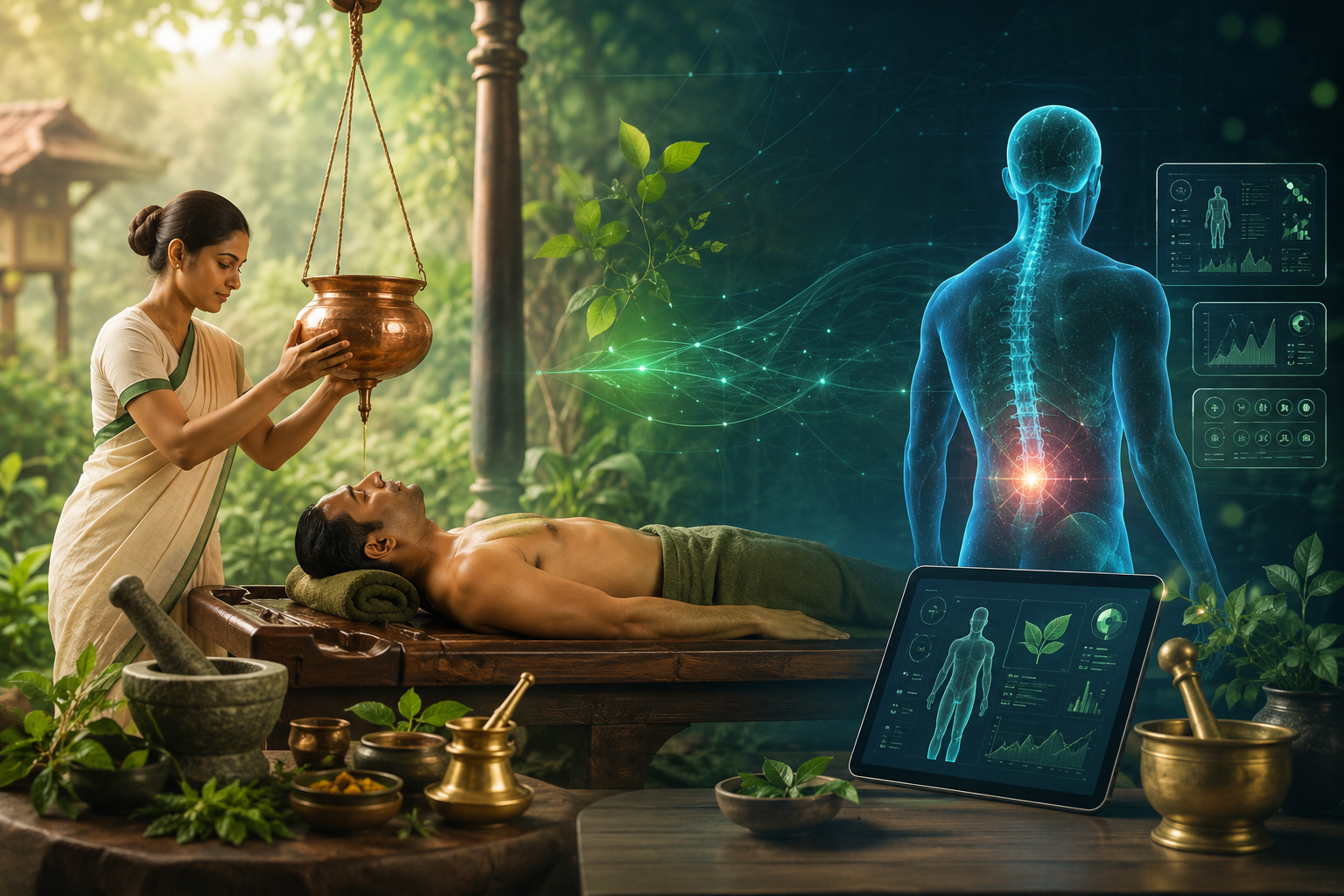
For centuries, Ayurveda has been one of the oldest as well as the most holistic approach to medicine known to man. It emphasized the natural balance within the physical, mental, as well as spiritual planes in the body. However, in today’s rapidly transforming healthcare sector that is powered by AI, there is a growing convergence of the ancient knowledge of Ayurveda and technology. This emerging fusion, which is often referred to as Ayurtech, is revolutionizing the diagnosis, monitoring, as well as treatment of chronic pain disorders. Especially in the land of classical Ayurveda,-Kerala, there have been remarkable advancements in this aspect.
Increasing Need for Effective Methods of Pain Management
It is widely recognized that chronic pain is one of the most severe problems in contemporary healthcare. The number of patients with conditions such as arthritis, cervical spondylosis, sciatica, fibromyalgia, or lower back pain is enormous and growing.
Conventional methods of treating the conditions under consideration rely mostly on relieving the symptoms rather than addressing their causes. In contrast, Ayurveda treats pain through the identification of the core disorder in the person's body according to the principles of Vata, Pitta, and Kapha doshas and aims at returning the natural balance through a wide array of means -therapies, herbal remedies, detoxification, diet, lifestyle.
What Is the Concept of Ayurtech?
The concept of Ayurtech involves incorporating innovative digital technologies, data intelligence, and systems using artificial intelligence algorithms into the existing methods of Ayurvedic treatment. Modern AI solutions allow analyzing an enormous amount of data related to various patient characteristics, including:
- Lifestyle choices
- Sleep patterns
- Dietary preferences
- Level of stress
- Activity
- Body constitution
- Reactions to various treatments in the past
Through the analysis of all the mentioned factors, AI technology enables identifying health risks and choosing appropriate treatments and therapy for preventing pain recurrence.
How AI is Transforming Ayurvedic Pain Treatment
1. Personalized Dosha-Based Treatment Planning
One of Ayurveda’s greatest strengths lies in personalization. No two patients are treated the same way because every individual has a unique body constitution. AI systems are now capable of analyzing patient questionnaires, biometrics, data from wearable devices, and clinical records to assist practitioners in pinpointing any dominant dosha imbalance for better accuracy, resulting in more personalized treatments.
For instance, two patients suffering from chronic lower back pain can recommend two entirely different treatment regimens based on the difference between the body constitution, digestion system, stress levels, and inflammatory markers. Precision in such cases would result in improved efficiency of Ayurvedic pain management techniques and reduced numbers of unnecessary treatment sessions.
2. Predictive Healthcare and Preventative Care Predictive health management appears to be among the most promising uses of artificial intelligence in contemporary medicine. In connection with the management of pain in accordance with the principles of Ayurveda, AI can be used for identifying possible triggers that cause pain before the development of acute pain.
Artificial intelligence could be used to analyze:
- Seasonal health changes
- Insomnia
- Physical activity
- Levels of stress
- Nutritional habits
- Inflammations
The analysis of these markers will help practitioners adjust therapies, conduct preventative Panchakarma procedures, or change the herbs used as medication.
3. More Effective Panchakarma Recommendations Panchakarma therapy is considered one of the most effective means of cleansing and rejuvenation of the human body via various cleansing procedures. With the help of AI technology, now it is possible to find out such things as:
- Most effective Panchakarma treatment regimens
- Proper treatment time
- Recovery time period
- Nutrition recommendations
- Patient eligibility
Based on analysis of historical data and past performance, clinics may increase effectiveness of their Panchakarma procedure and make sure of patient safety. In wellness centers that offer luxurious Ayurvedic treatments in Kerala, individual healing experiences gain a special appeal among foreign guests.
4. Online Monitoring and Digital Wellness Eco-Systems
The emergence of telemedicine along with advanced wearable devices has enabled the expansion of the reach of Ayurvedic medicine far beyond its physical premises.
AI-powered apps will allow patients to:
- Record the severity of pain
- Stick to personalized diet
- Watch sleep and stress levels
- Adhere to medication schedules
- Get wellness notifications
- Communicate with practitioners online
Thus, digital wellness eco-systems will promote continuous healing rather than individual procedures. In case of international patients who have received Ayurvedic Treatments in Kerala, this technology will enable continued care after their return home.
The Future of Ayurvedic Pain Management
In future, pain management is expected to be more individualized, preventive, and evidence-based. The Ayurvedic philosophy is already well-aligned towards holistic healing methods, while integration with AI provides possibilities for scaling up precision, consistency, and prediction. Some benefits that Ayurtech will bring to pain management in the future include:
- Personalized assessments of wellbeing
- Quickly personalized treatments
- Pain prevention strategies based on data
- Positive therapy results
- Blending physical and digital healing practices
All of this may potentially make Ayurveda a traditional practice and an internationally recognized innovation in the field of holistic healthcare.
Conclusion
Combination of AI technologies and Ayurveda opens a completely new chapter for the future development of the healthcare industry. From personalized Panchakarma to prediction of pain management needs, application of AI in Ayurveda can radically change our approach towards chronic pain.
Thanks to the rich heritage of healing traditions and innovative Ayurvedic Treatments in Kerala, this state may potentially take a leading position in this revolution. Advanced Ayurtech-powered therapies in Kerala might become the future of pain care in the world.